Understanding hair loss.
A widening part, a receding hairline, or more hair in the brush — hair loss affects women and men alike, and you are not alone.
We take a personalized, scientific approach to understand what is behind your hair changes and build a plan around you.
TricoTest® $140Fully credited toward any Personalized Trichology Treatment Program.
What it is
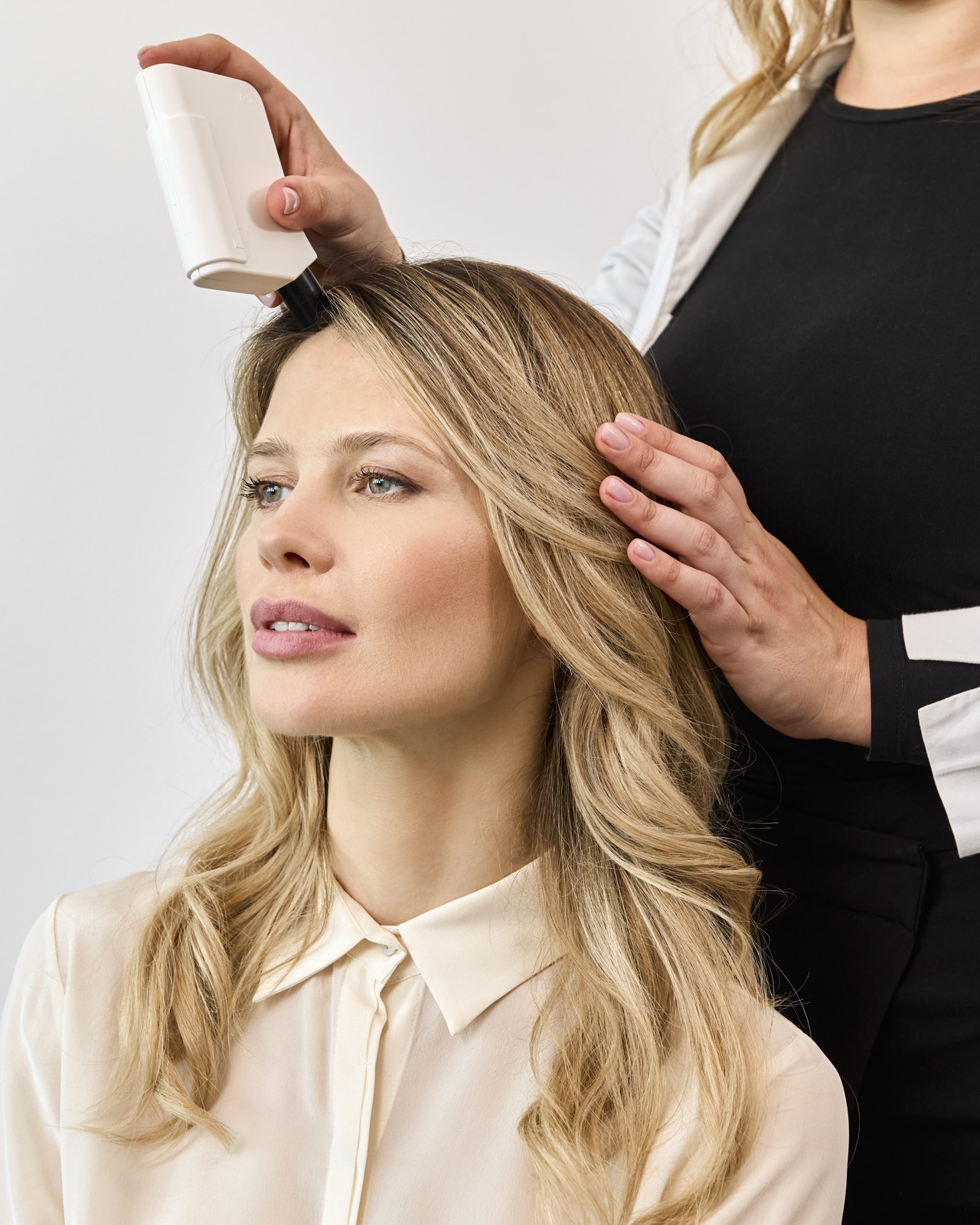
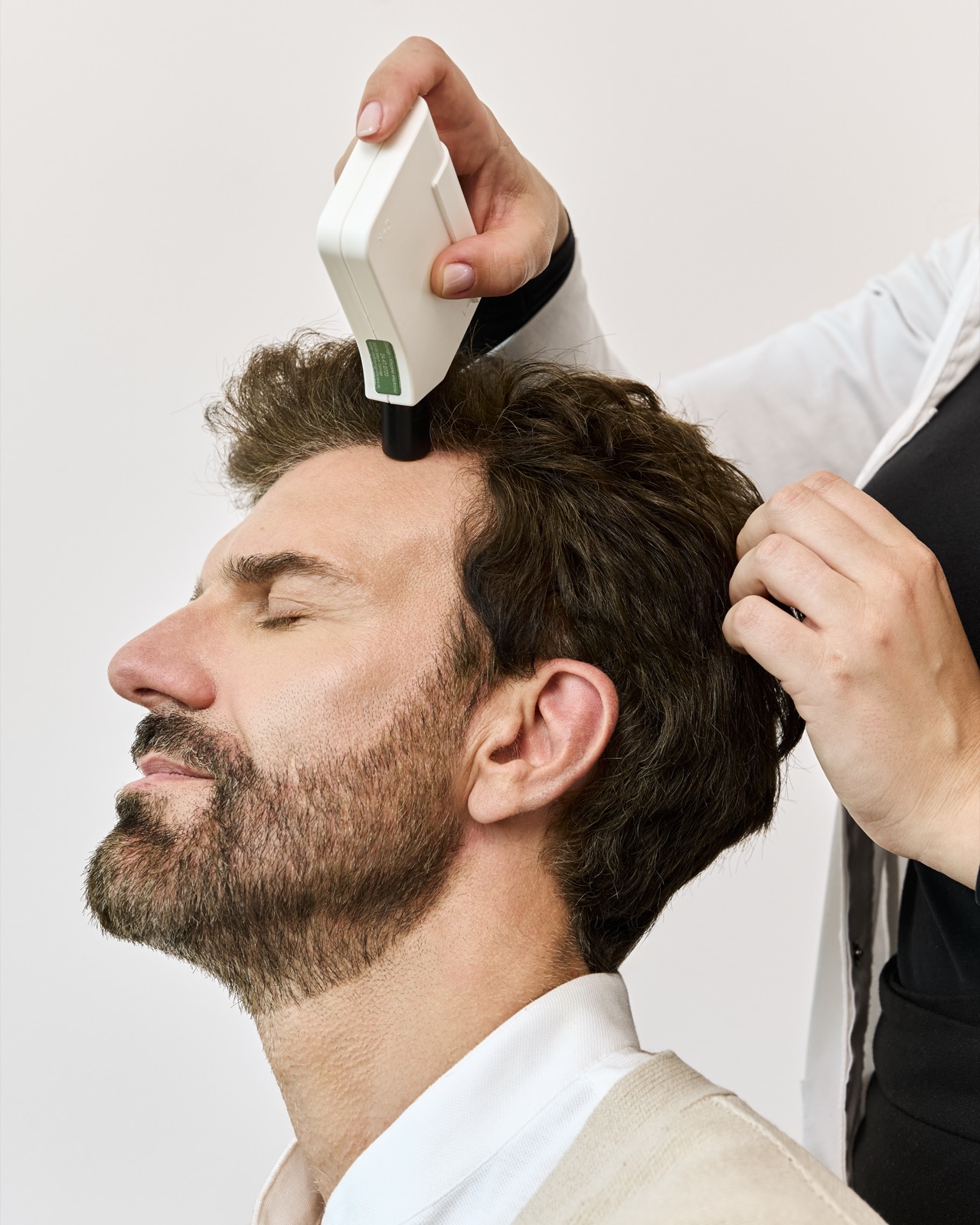
A gradual change in hair density.
Hair loss is a gradual change in the hair growth cycle or in hair density. It may appear as overall thinning, a widening part, a receding hairline, thinning at the crown, or increased shedding. It often has several contributing factors and can be progressive, which is why understanding it early matters.
The hair growth cycle
| Phase | Stage | What happens |
|---|---|---|
| Anagen | Growth phase | Hair actively grows, typically for several years. |
| Catagen | Transition phase | A brief period of change, lasting a few weeks. |
| Telogen | Resting phase | Hair rests, usually for around three months. |
| Exogen | Shedding phase | The old hair sheds to make way for new growth. |
Common causes
Multiple factors can contribute.
Hair loss often reflects a combination of internal, external and lifestyle factors. Identifying yours is the first step toward the right care.
When medical care is involved, we collaborate with your physician.
- Genetics: pattern hair loss, which can run in families.
- Medications: some prescriptions and hormonal therapies.
- Hormonal changes: androgen sensitivity, menopause, postpartum or thyroid changes.
- Stress: physical or emotional.
- Medical conditions: thyroid and autoimmune conditions, nutritional deficiencies.
- Hair and scalp practices: heat styling, tight hairstyles, chemical treatments, scalp inflammation.
Women & men
Different biology, different patterns.
The causes overlap, but genetics, hormones and the way hair loss typically appears can differ between women and men. These are general patterns — your own assessment is what matters.
| Topic | Women | Men |
|---|---|---|
| Genetics | Female pattern hair loss is often linked to family history and may become more noticeable with age. | Male pattern hair loss is strongly hereditary and can begin as early as the late teens or twenties. |
| Hormones | Shifts around pregnancy, menopause or thyroid changes can influence thinning and shedding. | Follicles that are genetically sensitive to DHT, a by-product of testosterone, gradually become finer. |
| Typical pattern | Diffuse thinning over the top of the head and a widening part, while the front hairline is usually kept. | A receding hairline at the temples and thinning at the crown, which may progress over time. |
How we assess it
A scientific, personalized evaluation.
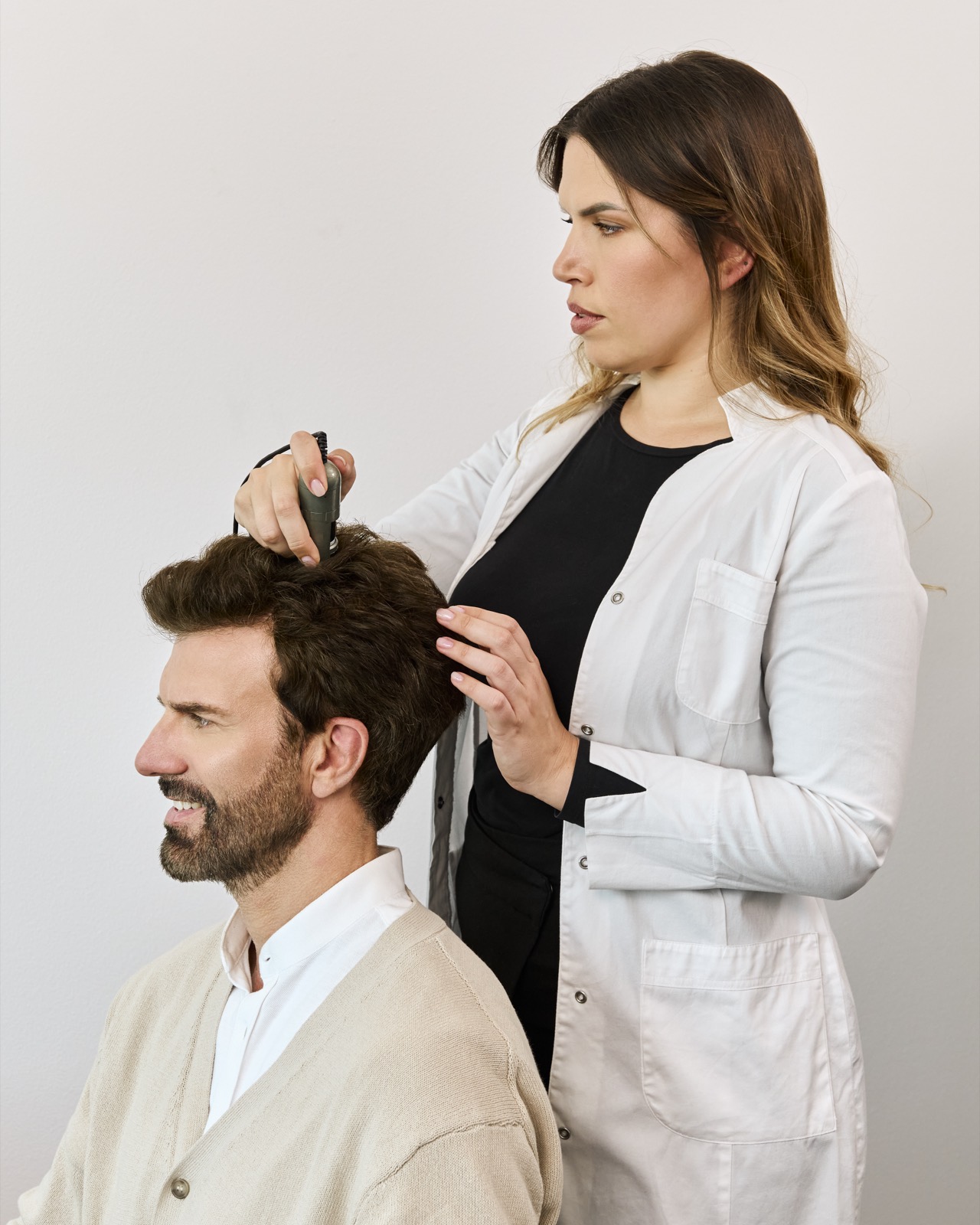
Advanced imaging, clinical expertise and a detailed consultation help us understand what is contributing to your hair loss.
Our 4-step method
Detailed consultation
Your history, lifestyle and goals.
Scalp imaging
TricoTest® microcamera imaging of your hair and scalp.
Findings review
What may be contributing to your hair changes.
Personalized plan
A plan designed around you, reviewed over time.
Recommended care
Personalized solutions for healthier, fuller-looking hair.
Your plan is tailored to your needs, combining in-studio care and home care to address contributing factors and support long-term results.
TricoTest® Analysis
Advanced imaging and expert evaluation to understand what is behind your hair loss.
Learn moreFor advanced hair loss: CNC®
A custom, non-surgical cranial prosthesis, individually made in Italy.
Learn moreHair loss conditions
The main types of hair loss.
Genetic Hair Loss
Gradual, patterned thinning linked to heredity and hormones.
ReadAutoimmune Hair Loss (Alopecia)
Patches of hair loss caused by the immune system.
ReadReactional Hair Loss (Telogen Effluvium)
Diffuse shedding that follows a physical or emotional stress.
ReadChemotherapy & Radiation
Hair loss caused by medical treatment.
ReadTrichotillomania
Hair loss caused by repeated pulling.
ReadWhat is the most common cause of hair loss?
Pattern hair loss — female or male — is among the most common causes, but hormonal changes, stress, medical conditions, nutrition and hair care practices can also play a role. Often it is a combination, which is why a personal assessment matters.
Is hair loss different for women and men?
Often, yes — in the hormones involved and in how it typically appears. The assessment is the same for everyone: we look closely at your own history, hair and scalp.
Can hair loss be reversed?
It depends on the cause. Some shedding improves once the trigger is addressed, while other types are progressive and benefit from early, consistent care. Results vary, and your specialist will discuss realistic expectations.
How do you identify the cause of my hair loss?
Through a detailed consultation and a TricoTest® analysis with microcamera imaging. We do not diagnose medical conditions; when medical care is involved, we collaborate with your physician.
How long does it take to see results?
Hair grows slowly, so changes are usually assessed over several months. Your progress is reviewed at regular re-evaluations.
Are the treatments safe?
Our care is non-surgical and non-invasive. Your history is reviewed before any recommendation — please let us know about any medical conditions, medications, or pregnancy.
Still have a question?
Call us, or book a private consultation and ask in person.
Your next step
Start your hair restoration journey.
A private consultation in Laguna Hills to understand your hair, what may be contributing to it, and the right next step for you.
- Hours
- Tuesday – Saturday · 9 AM – 5 PM
By appointment only - Private & no obligation
- Consultations take place one-to-one, in a private room.